

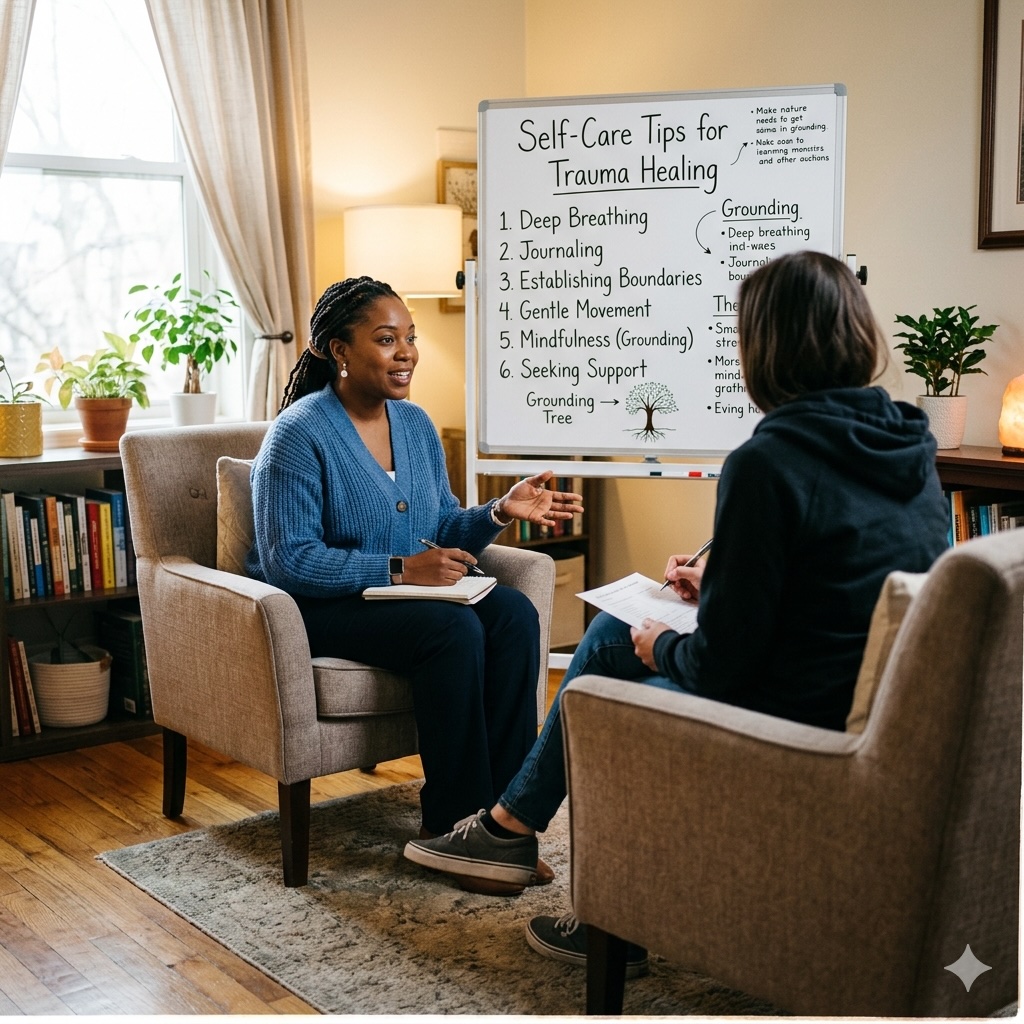
These low-energy self-care tips can help on those days when a person who has gone through trauma is feeling especially drained:
1. The “Nest” Method (Sensory Safety)
If you’re feeling hyper-vigilant or exposed, build a physical “nest.” Use heavy blankets (or a weighted blanket), dim the lights, and surround yourself with soft textures. This helps signal to your brain that your immediate perimeter is secure and “closed off” from the world.
2. Temperature Reset
When the “mental noise” is too loud, a sharp change in temperature can force your nervous system to pivot.
- Cold: Splash ice-cold water on your face or hold an ice cube in your hand. This can trigger the mammalian dive reflex, which naturally slows your heart rate.
- Warm: Hold a warm mug of tea (even if you don’t drink it) to ground yourself in the sensation of heat.
3. “Digital Minimalist” Entertainment
Avoid scrolling social media, which is a minefield for triggers. Instead:
- Watch “restoration” videos (hoof cleaning, rug washing, or pottery).
- Listen to a brown noise or rain sounds playlist.
- Watch a movie you’ve seen 100 times—predictability is very soothing for a traumatized brain because there are no “surprises.”
4. Horizontal Stretching
You don’t need a yoga mat. You can do gentle stretches right in bed. Try “Happy Baby” pose or simply hugging your knees to your chest. Stretching helps release the cortisol that often gets “stuck” in the hips and lower back during survival mode
5. The “Five-Minute” Rule for Basics
If hygiene feels impossible, don’t try to do the whole routine.
- Use a wet washcloth instead of a shower.
- Use mouthwash instead of brushing.
- Change only your socks.
Small “refreshers” can provide a tiny hit of dopamine without the exhaustion of a full task.
6. Nature via Proxy
If you can’t get outside, sit by a window for five minutes or look at high-quality photos of forests or oceans. Research shows that even looking at images of nature can lower cortisol levels and help the nervous system settle.
REMEMBER, on these days, your brain is working overtime to protect you. Doing “nothing” is actually a very active form of recovery.
Have you gone through trauma that feels overwhelming? BOOK A SESSION now and talk to a therapist