

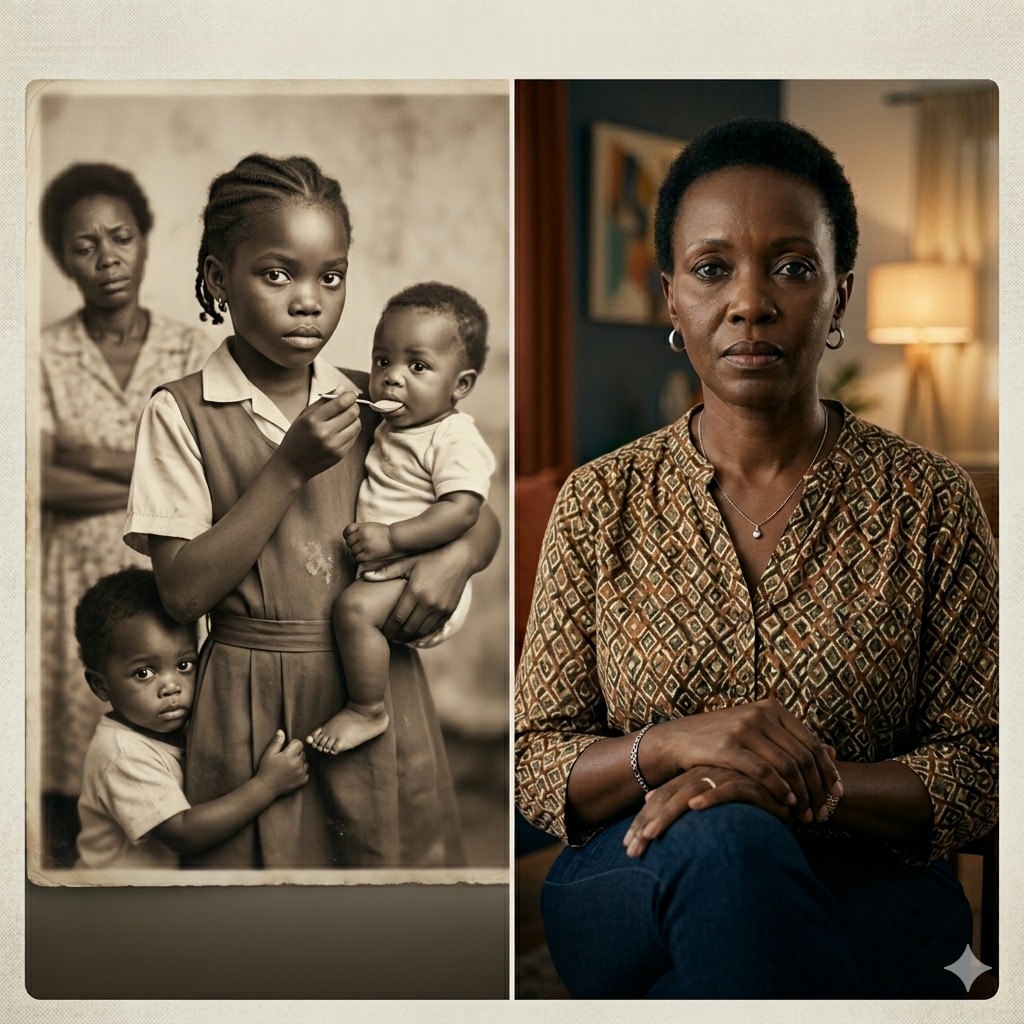
In many African households, we take immense pride in our resilience. We celebrate the “strong” child, the “quiet” one, and the one who always keeps the peace.
But, some of these celebrated traits aren’t just personality—they are clever adaptations we developed to thrive within our family ecosystems.
Understanding these isn’t about casting blame; it’s about healing and honoring the individual.
Here are five common “traits” that might actually be childhood wounds.
1. The “High Achiever” (The Performance Wound)
- The trait – You are ambitious, a perfectionist, and constantly seeking the next degree or promotion.
- The Wound: You may have learned early on that love and validation are conditional, tied strictly to your output and how well you represent the family name.
- The Shift: You are more than your CV. Your worth is inherent, not earned.
2. The “Super Independent” One (The Hyper-Independence Wound)
You “don’t need anything” and have “figured it out on their own.”
- The Trait: You refuse to ask for help, even when drowning. You take pride in doing everything yourself.
- The Wound: This often stems from emotional neglect. If your needs weren’t met or noticed as a child, you simply stopped expecting others to show up for you.
- The Shift: Vulnerability is a form of strength. Interdependence is the true heartbeat of a healthy community.
3. The “Peacemaker” (The Conflict Avoidance Wound)
In collectivist settings, harmony is king. But sometimes, that harmony comes at a high personal cost.
- The Trait: You are easygoing, hate “drama,” and always agree with the group to keep things smooth.
- The Wound: You might have been the “buffer” between parents or siblings, learning to suppress your own feelings to manage the emotions of others.
- The Shift: Peace is not the absence of conflict; it is the presence of honesty. Your voice matters.
4. The “Family Fixer” (The Parentification Wound)
Many of us grew up fast, taking on adult responsibilities—emotional or financial—before we were ready.
- The Trait: You are the “responsible” one. Everyone comes to you with their problems, and you feel guilty when you can’t solve them.
- The Wound: You were likely “parentified,” meaning the boundaries between child and adult were blurred. You learned that your value lies in being a pillar for others.
- The Shift: It is okay to be “held” sometimes. You don’t have to carry the world on your shoulders to be loved.
5. The “Quiet One” (The Erasure Wound)
In a large, vibrant family, sometimes the easiest way to stay safe or stay “good” was to stay invisible.
- The Trait: You are highly observant, rarely speak up in meetings, and prefer to stay in the background.
- The Wound: You may have learned that your needs or opinions were an inconvenience to the family structure, so you shrunk yourself to fit in.
- The Shift: Taking up space is your birthright. Your perspective enriches the collective.
Moving Toward Healing
- Recognizing these patterns is the first step towards empowerment. When we heal ourselves, we aren’t just changing our own lives; we are shifting the legacy of our entire lineage.
- Let’s move toward a version of “strong” that includes emotional wellness and authentic connection.