

Low-Energy Self-Care Tips For Trauma Healing
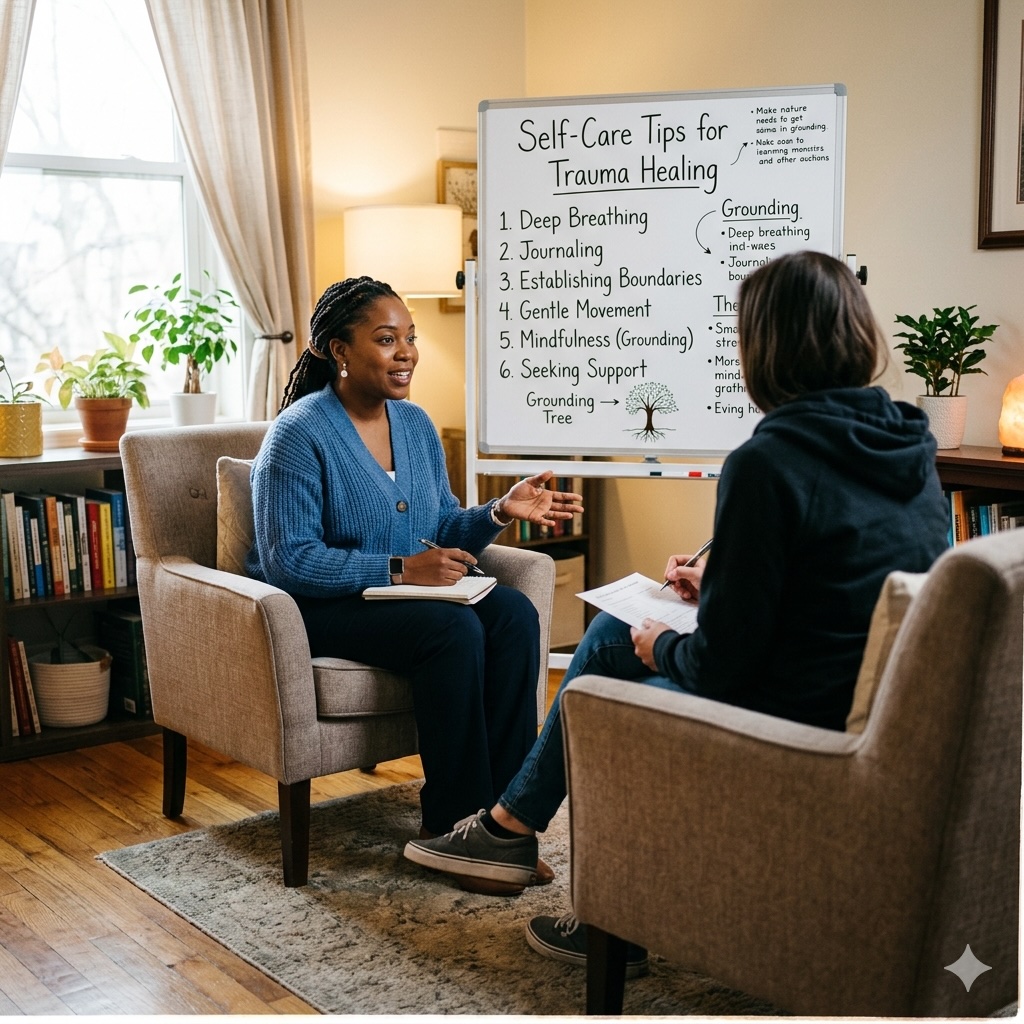
These low-energy self-care tips can help on those days when a person who has gone through trauma is feeling especially drained: 1. The “Nest” Method (Sensory Safety) If you’re feeling hyper-vigilant or exposed, build a physical “nest.” Use heavy blankets (or a weighted blanket), dim the lights, and surround yourself with soft textures. This helps signal to your brain that your immediate perimeter is secure and “closed off” from the world. 2. Temperature Reset When the “mental noise” is too loud, a sharp change in temperature can force your nervous system to pivot. 3. “Digital Minimalist” Entertainment Avoid scrolling social media, which is a minefield for triggers. Instead: 4. Horizontal Stretching You don’t need a yoga mat. You can do gentle stretches right in bed. Try “Happy Baby” pose or simply hugging your knees to your chest. Stretching helps release the cortisol that often gets “stuck” in the hips and lower back during survival mode 5. The “Five-Minute” Rule for Basics If hygiene feels impossible, don’t try to do the whole routine. 6. Nature via Proxy If you can’t get outside, sit by a window for five minutes or look at high-quality photos of forests or oceans. Research shows that even looking at images of nature can lower cortisol levels and help the nervous system settle. REMEMBER, on these days, your brain is working overtime to protect you. Doing “nothing” is actually a very active form of recovery. Have you gone through trauma that feels overwhelming? BOOK A SESSION now and talk to a therapist
Benefits of Therapy Beyond Mental Health

Have you ever considered therapy, but hesitated because you felt your life wasn’t “broken” enough? As a therapist, I hear this more often than you might think. Many people believe therapy is strictly a reactive tool—a place to go only when the weight of the world becomes unbearable. But what if I told you that therapy is just as much about optimization as it is about remediation? While the primary goal of therapy is improving mental health, the ripple effects extend far beyond the counselor’s office. It’s not just about overcoming anxiety or navigating depression; it is a catalyst for leveling up in every area of your life. How therapy transforms you beyond mental health: 1. Professional Superpowers: Communication and EQ In today’s fast-paced work environment, technical skills get you in the door, but emotional intelligence (EQ) gets you promoted. Therapy is essentially a masterclass in EQ. It teaches you to: 2. Unlocking Creativity and Decision-Making Ever feel mentally paralyzed by too many choices, or creatively blocked? That is often not a lack of talent; it’s a bottleneck of unaddressed mental clutter. When you clear away anxiety, intrusive thoughts, and subconscious limiting beliefs in therapy, you free up immense cognitive capacity. Mental clarity equals creative energy. When you aren’t expending energy holding back emotional pain, you have more resources for innovation, strategic planning, and decisive action. 3. Relationships That Actually Work We spend our lives navigating relationships—romantic, platonic, and familial. Yet, we rarely receive training on how to make them healthy. Therapy helps you break toxic patterns, set firm boundaries, and practice radical empathy. By understanding your own attachment style and emotional needs, you become a better partner, friend, and colleague. You stop chasing validation and start fostering genuine connection. 4. Radical Self-Awareness: The Ultimate Life Hack Perhaps the greatest benefit of therapy is discovering who you actually are, beneath the conditioning of society, family, and past experiences. This self-awareness is empowering. It means: The Verdict: Therapy is A Proactive Investment Therapy is not just for repairing a broken spirit; it is for honing a sharp mind and a balanced life. It is the ultimate form of professional and personal development. Think of it less like a hospital visit and more like having a personal trainer for your inner world. Ready to invest in yourself? If you are looking to take your life from functional to exceptional, therapy is one of the fastest route there. BOOK NOW
The Art of Saying “NO”

We’ve all been there! A request arrives—perhaps a low-priority project, an invitation to an event you dread, or a favor that simply doesn’t fit your capacity—and your chest tightens. Instead of a simple “no,” you craft a masterpiece of justification. You write about your hectic schedule, your impending deadlines, and how truly, deeply sorry you are that you cannot be there. By the time you hit send, you’ve spent 20 minutes feeling guilty and used up your precious emotional energy justifying a boundary. As a therapist, I often tell my clients: “No” is a complete sentence. It feels counterintuitive, perhaps even rude. However, over-explaining is a classic symptom of people-pleasing or fear of conflict. We worry that if we don’t provide a valid reason, we are being unhelpful, selfish, or unkind. When you apologize for saying no, you are subconsciously signaling that your time, energy, and priorities are less valuable than the requester’s. You are asking for permission to have limits, rather than simply stating them. Here is how to master the art of a guilt-free, friendly, and concise “no.” 1. Embrace “No” as a Complete Sentence You do not need to justify your existence or your schedule. Instead of: “I’m so sorry, I have a dentist appointment, and then I have to pick up my kids, and I’m just swamped…” Try: “Thank you for thinking of me, but I cannot take this on right now.” 2. Shift from Apology to Appreciation Replace “I’m sorry” with a note of gratitude. It keeps the interaction positive without taking on undue guilt. Instead of: “I’m so sorry I can’t attend.” Try: “Thank you for the invitation, but I won’t be able to make it.” 3. Offer a Pivot, Not a Promise If you want to be helpful without doing the work yourself, offer a resource or a better time. Instead of: “I can’t do it now, but maybe in three months?” Try: “I am fully committed right now, but [Name] might be a great resource for this.” Boundaries are necessary for long-term success and mental health. A firm, polite “no” demonstrates respect for both your time and the requester’s time by giving them a clear answer immediately. Try this today: The next time a request comes in, draft your reply, then delete every sentence that starts with “I’m sorry” or “Because.” You might be surprised at how empowered you feel. Would you like to talk to someone? BOOK NOW